



The First 6 Months
Since the gum and bone tissue are still fresh, protection is kept at its highest level.
 TRWhatsApp
TREATMENTS
Preserve the perfect smile you achieved at the end of your orthodontic treatment for life. The retention phase is the most critical stage that allows teeth to adapt to their new positions and locks in the success of your treatment.

WHAT IS IT?
When clear aligner or wire treatment ends, it takes time for the bone and gum fibers surrounding the teeth to fully adapt to the new position. During this adaptation period, teeth tend to drift back toward their old, crowded state (relapse). Retention treatment is the passive protection process applied to prevent teeth from shifting.
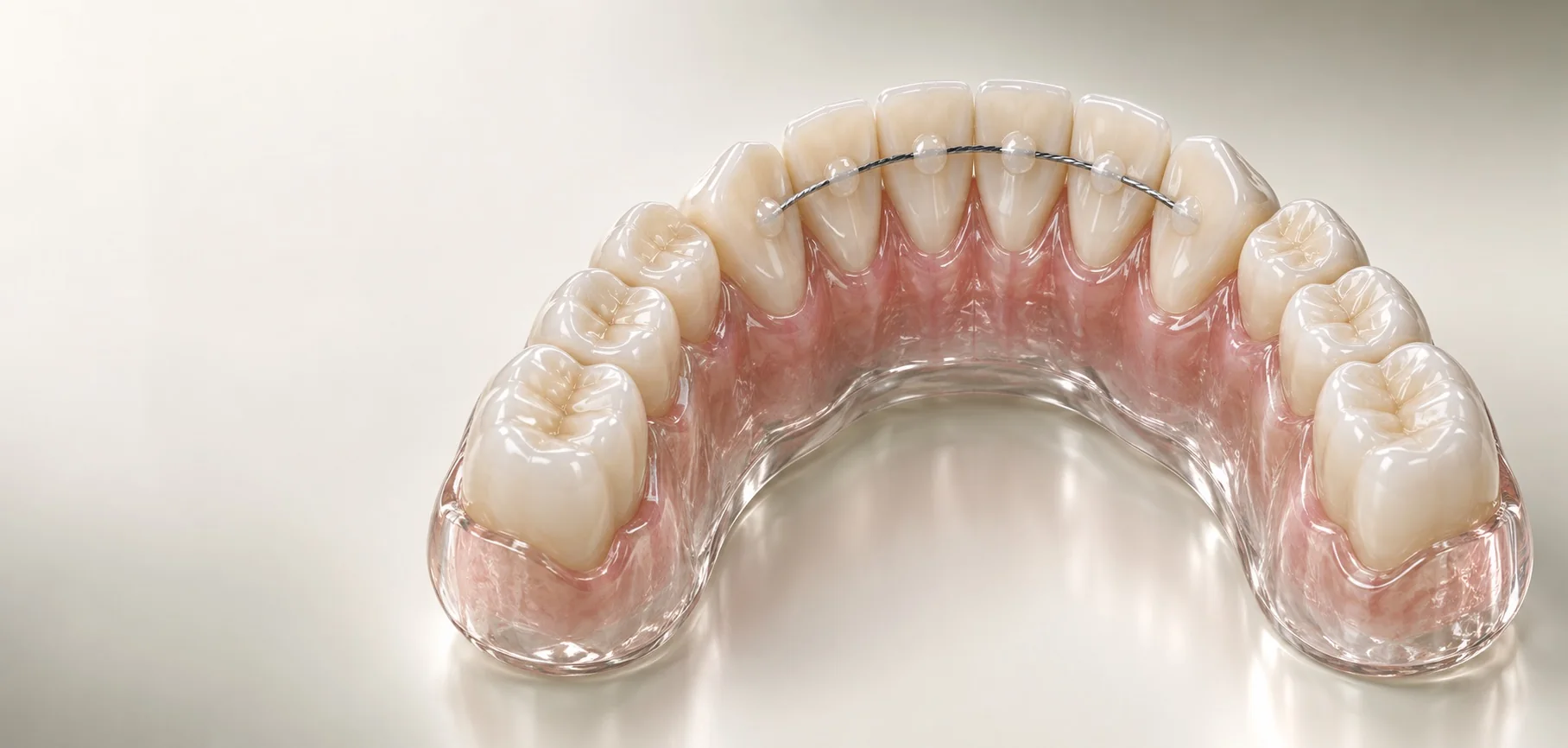
LINGUAL RETAINER · INNER WIRE
The thin retainer wire is bonded to the tongue-side surfaces of the front teeth with small composite bonds. The type of retainer used and the follow-up schedule are determined by personal clinical assessment.
TYPES OF RETAINERS
SITUATIONS IT MAY BE CONSIDERED FOR
PROCESS
Since the gum and bone tissue are still fresh, protection is kept at its highest level.
It is recommended that the lingual retainer wire remain in the mouth unless your dentist advises otherwise.
The condition of retainers is assessed at routine orthodontic check-ups, which should be done once a year.
FREQUENTLY ASKED QUESTIONS
No, since it sits on the inner surface of the teeth it is not visible from the outside. Because it has a very thin structure, the tongue fully adapts to its presence within the first few days.
For the first months after treatment ends, wear the times set by your dentist; later on, wearing them only at night while sleeping is enough.
Since teeth can shift position very quickly, you should contact our clinic without losing any time so the wire can be repaired or a new retainer can be made.
This content is for general informational purposes; it does not replace a personal diagnosis or treatment recommendation.