



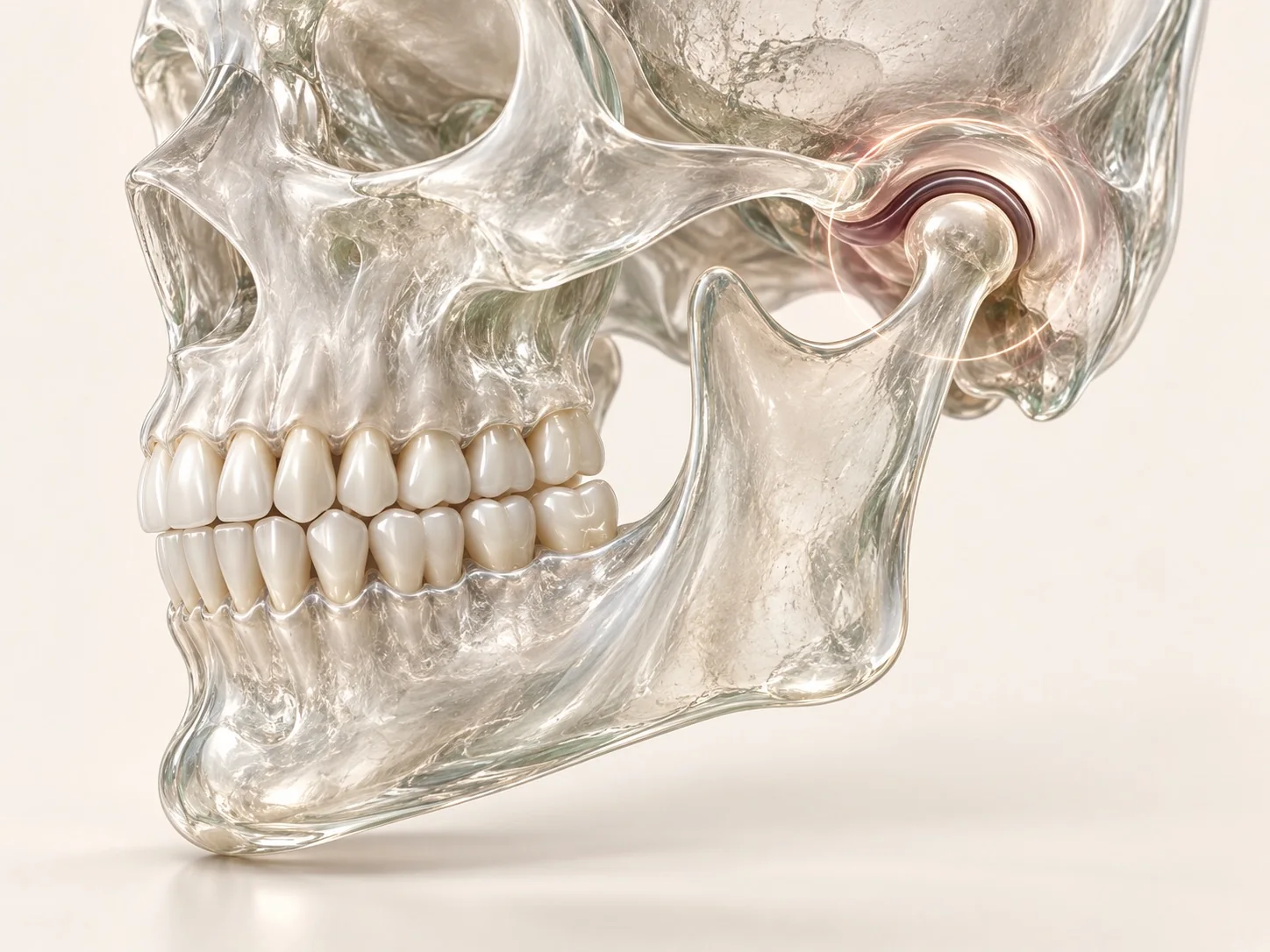
Jaw joint anatomy
A representative anatomical study prepared to make the relationship between lower-jaw movement and the joint region easier to understand.
 TRWhatsApp
TREATMENTS
Don't let complaints in the jaw joint (TMJ) — such as pain, clicking sounds, locking and teeth clenching (bruxism) — lower your quality of life. With a detailed joint examination and personalized treatment protocols, we help you regain the health of your joint.

WHAT IS IT?
The jaw joint (temporomandibular joint) is a complex structure connecting the temporal bone to the lower jawbone, enabling our speech and chewing functions. Slippage of the joint disc, muscle spasms or an improper bite can lead to joint disorders.
COMMON SYMPTOMS
These images are representative studies prepared to explain the anatomy and treatment approach; they do not show a personal treatment plan or result.
A representative anatomical study prepared to make the relationship between lower-jaw movement and the joint region easier to understand.
SITUATIONS IT MAY BE CONSIDERED FOR
PROCESS
Diagnosis is made through muscle palpation, measurement of joint range of motion, and MRI/CT imaging when needed.
Custom-made hard, clear splints reduce the load placed on the jaw joint, relax the muscles and guide the disc back to its ideal position.
Faulty tooth contacts and bite problems causing the joint issue are permanently corrected with orthodontic treatment.
Referrals for physical therapy, muscle-relaxing applications and lifestyle changes.
FREQUENTLY ASKED QUESTIONS
No. The occlusal splints used in joint treatment are hard appliances custom-fitted by a dentist. Soft mouthguards can actually increase clenching.
Early-stage muscle-related problems may ease with rest; however, if disc deformations are left untreated, they can become chronic and lead to joint deterioration.
Splint use varies by case but generally lasts 3 to 6 months, monitored with regular dental check-ups.
This content is for general informational purposes; it does not replace a personal diagnosis or treatment recommendation.